
Best Roofing Sheets for House: A Complete Buying Guide
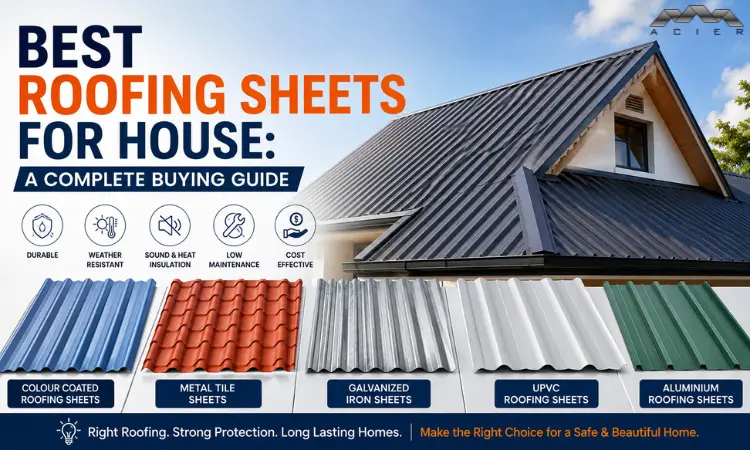
The best roofing sheets for a house depend on climate, budget, roof design, durability needs and appearance, not a single universally superior material. Colour-coated steel and Galvalume suit many modern Indian homes, aluminium is worth considering for coastal and humid areas, fibre cement helps with heat and rain noise, and polycarbonate works well where natural daylight matters, such as verandas and carports. The right sheet for a main roof may not be the right sheet for a car porch or terrace extension.
A roof does more work than most homeowners give it credit for: it’s the first line of defence against sun, rain, wind and dust, day after day, in whatever climate a house happens to sit in. Choosing the wrong roofing sheet doesn’t usually show up as an obvious mistake on day one; it shows up two monsoons later as a leak, or after a few summers as a room that’s noticeably hotter than it should be. India’s roofing market now offers a considerably wide range of options: colour-coated steel, Galvalume, GI (galvanised iron), aluminium, fibre cement, polycarbonate, UPVC and bitumen sheets, each built around different strengths. The best roofing sheets for a house depend on climate, budget, roof design, durability expectations and appearance, and the right choice for a main living area isn’t necessarily the right choice for a veranda, car porch or terrace extension on the same property. Sheet quality, thickness, coating and installation matter just as much as which material is chosen in the first place. This guide walks through the main roofing sheet types available for Indian homes, what affects performance, and how to think through the decision for your specific project. Acier Roofing Solutions, based in Mangalore, is one place to explore residential roofing options if you’re comparing sheets for an upcoming build or renovation.
Comparing sheets for a build or renovation? Get in touch with Acier Roofing for guidance on your project
What Are Roofing Sheets?
A home roof sheet, or roofing sheet more generally, is a pre-formed panel, usually metal, cement-based or plastic, installed over a roof structure to provide weatherproofing and structural covering. Unlike traditional tiled or poured concrete roofs, sheets are manufactured off-site to a consistent profile and thickness, then fixed onto purlins or rafters using fasteners suited to the specific material. Steel roofing sheets in particular are used across houses, verandas, garages, terraces, sheds and extensions, and the same broad category, “roofing sheets”, covers everything from a basic corrugated GI sheet on a shed to a premium colour-coated steel sheet on a main house roof.
Why Choosing the Right Roofing Sheet Matters
Protection from Weather
The right sheet, correctly installed, keeps rain, wind-driven dust and direct sun off the structure underneath, which is the roof’s basic job before anything else.
Better Durability
Material quality, coating and thickness all affect how well a sheet holds up against corrosion, UV exposure and physical wear over years of use.
Improved Appearance
Colour, profile and finish affect how a house looks from the outside, and modern colour-coated and profiled options give homeowners far more choice than older plain GI sheets did.
Lower Maintenance
A well-chosen, well-coated sheet generally needs less frequent repainting, patching or replacement than a poorly matched or lower-quality one.
Better Heat Management
Reflective coatings, insulated panel constructions and the right profile all influence how much heat transfers into the room below, which matters considerably in India’s hotter regions.
Types of Roofing Sheets for Houses
1. Colour-Coated Roofing Sheets
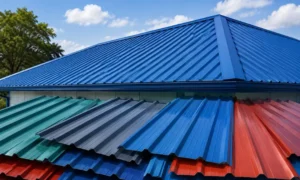
Colour coated roofing sheets use a steel substrate, commonly galvanised steel or Galvalume, finished with a protective paint or polymer coating over the base metal. This coating does two jobs: it adds a layer of corrosion protection beyond the base metal coating, and it gives the sheet its final colour and finish. These sheets come in a range of colours and profiles and have become a common choice for modern residential projects where appearance matters alongside performance.
Advantages: a wide choice of colours and profiles, added corrosion protection from the paint layer, and a more finished, modern appearance than plain metal.
Best suited for: main house roofs and visible roof areas where appearance and finish matter alongside weather protection.
2. Galvalume Roofing Sheets
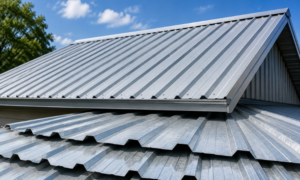
Galvalume sheets are steel coated with an aluminium-zinc alloy, generally referred to as Al-Zn coating, rather than the zinc-only coating used on standard galvanised steel. This alloy coating is widely used in the industry for its corrosion resistance, since the aluminium content helps protect cut edges and scratches better than zinc alone in many conditions. As with any coated steel product, actual performance depends on coating quality and thickness, the environment the sheet is exposed to, and how carefully it’s installed and maintained.
Advantages: strong corrosion resistance from the Al-Zn coating, good heat reflectivity, and suitability as a base for further colour coating.
Best suited for: homes in a range of climates where a durable, corrosion-resistant base material is wanted, either bare or as the substrate for a colour-coated finish.
3. GI Roofing Sheets
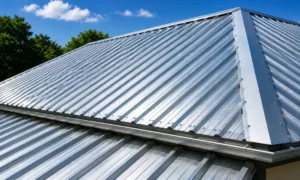
GI stands for galvanised iron, though in practice these are galvanised steel sheets coated with a layer of zinc to slow corrosion. GI sheets are among the most common and long-established roofing materials in India, widely used on house roofs, sheds and garages, particularly where budget is a bigger factor than appearance.
Advantages: cost-effective, widely available, and a well-understood, long-established material.
Best suited for: sheds, garages, utility structures and budget-conscious roofing where basic weather protection is the priority.
4. Aluminium Roofing Sheets
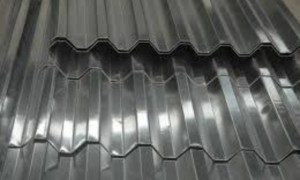
Aluminium is naturally resistant to rust, since it doesn’t corrode the way iron-based metals do, and it’s considerably lighter than steel for a comparable sheet size. This makes an aluminium roofing sheet house option worth considering specifically in coastal and humid locations, where salt-laden air accelerates corrosion on less resistant metals. Compared with commonly used steel roofing materials, aluminium generally holds up better against corrosion in harsh coastal environments, though the initial cost is usually higher, and homeowners should weigh that against the long-term value of reduced corrosion-related maintenance. For a closer look at the different aluminium profiles available, see our guide to aluminium roofing sheet types.
Advantages: naturally corrosion-resistant, lightweight, and well suited to long-span roofs with less structural steel needed underneath.
Best suited for: coastal homes, humid regions, and projects where long-term corrosion resistance justifies a higher upfront cost.
5. Fibre Cement Roofing Sheets
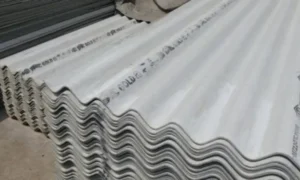
Fibre cement sheets are a composite roofing material made from cement reinforced with fibres, rather than a metal sheet. They’re commonly used for extensions, utility areas and certain residential structures where a non-metal roofing option is preferred. Compared with uninsulated metal sheets, fibre cement can offer some advantage in heat build-up and rain noise, since the material doesn’t conduct and radiate heat the way bare metal does, and tends to dampen the sound of heavy rain to some degree. Being heavier and more brittle than metal sheeting, fibre cement needs careful transportation and installation to avoid cracking.
Advantages: reduced rain noise compared with uninsulated metal, and a different aesthetic and structural option for certain applications.
Best suited for: extensions and utility areas where noise reduction is a consideration and careful installation is manageable.
6. Polycarbonate Roofing Sheets
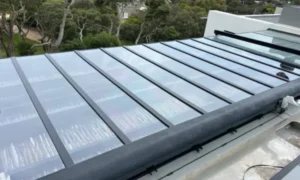
Polycarbonate is a lightweight plastic roofing material valued mainly for one thing metal sheets can’t offer: it lets natural daylight through while still providing weather cover. This makes it a common choice for verandas, car parking areas, walkways, balconies, outdoor sitting areas and skylight sections, where letting light in matters more than full opacity.
Advantages: allows natural daylight through, lightweight, and available in clear or tinted finishes.
Best suited for: verandas, carports, walkways, balconies, outdoor sitting areas and skylight sections rather than a main house roof.
7. UPVC Roofing Sheets
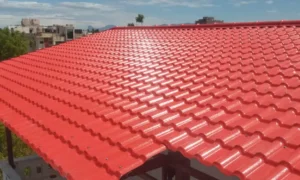
UPVC (unplasticised PVC) roofing sheets are a plastic-based option known for resisting moisture and corrosion well, since the material itself doesn’t rust or rot the way metal or wood-based products can. UPVC sheets are commonly used in extensions, utility areas and sheds where a low-maintenance, corrosion-proof option is useful.
Advantages: strong resistance to moisture and corrosion, and generally low maintenance once installed.
Best suited for: extensions, utility areas and sheds, particularly in damp conditions.
8. Bitumen Roofing Sheets
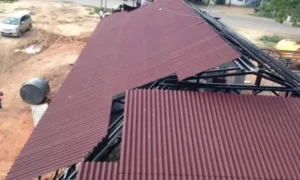
Bitumen roofing sheets are corrugated sheets impregnated with bitumen (asphalt), valued for being lightweight and generally affordable compared with metal or fibre cement alternatives. They’re commonly used in sheds, farm structures, temporary buildings and utility areas where cost and ease of handling matter more than long-term architectural finish. As with any roofing material, actual performance depends heavily on product quality, correct installation and how much weather exposure the sheet faces over time.
Advantages: lightweight, generally affordable, and simple to handle and install.
Best suited for: sheds, farm buildings, temporary structures and utility areas rather than a primary house roof.
Which Roofing Sheet Is Best for a House?
There isn’t a single sheet that’s best for every house, and treating this as a search for one universal winner usually leads to a worse outcome than matching the material to the actual application. Colour-coated steel and Galvalume tend to suit main house roofs in many parts of India well, balancing durability, appearance and cost. Aluminium earns its place specifically where coastal or humid conditions make corrosion resistance a priority worth paying for. Fibre cement, polycarbonate, UPVC and bitumen each solve a more specific problem, noise, daylight, damp resistance, low cost, and tend to suit secondary structures, extensions or specific functional areas rather than a main roof. The realistic approach is choosing per application: one material for the main roof, potentially another for the veranda or car porch on the same property.
Factors to Consider Before Buying Roofing Sheets
1. Climate of Your Location
Coastal, humid, hot-dry and heavy-rainfall regions each put different stress on a roofing sheet, and the right material shifts accordingly.
2. Sheet Thickness
Thicker sheets generally offer more structural strength and resistance to denting or damage, though this needs to be balanced against weight and cost for the specific application.
3. Coating Quality
The coating, whether zinc, Al-Zn or a painted finish, is what actually resists corrosion and weathering over time; a thin or poor-quality coating undermines even a good base material.
4. Roof Profile
Profile affects water runoff, structural strength and appearance; common profiles include trapezoidal, corrugated and tile-effect designs, each with different spans and visual results.
5. Roof Slope
Slope affects how quickly water drains off the roof, and different sheet types and overlaps are suited to different slope ranges; a manufacturer’s minimum recommended slope is worth checking before finalising a design.
6. Heat Insulation
Insulated panel constructions, such as PUF (polyurethane foam) sandwich panels, reduce heat transfer into the room below considerably more than a single uninsulated metal sheet.
7. Corrosion Resistance
How well a sheet resists rust or corrosion over years of exposure depends on the base material and coating together, not either one alone.
8. Quality of Fasteners
A high-quality sheet fixed with the wrong or poor-quality fasteners can still leak or fail early; fasteners with proper sealing washers matched to the sheet material matter more than they’re often given credit for.
9. Manufacturer Warranty
Warranty terms vary significantly by manufacturer, product line and even the specific coating grade chosen, so it’s worth checking the actual warranty document for a specific product rather than assuming a general industry standard applies.
Best Roofing Sheets for Hot Weather
In hot regions, reflective colour coatings and insulated panel constructions both help reduce how much heat transfers into the space below compared with a plain, uninsulated metal sheet. Lighter colours generally reflect more solar heat than darker ones on the same material. Where budget allows, an insulated sandwich panel construction gives a more noticeable difference in indoor temperature than coating choice alone, since it addresses heat transfer through the panel itself rather than only its surface reflectivity.
Best Roofing Sheets for Coastal and Humid Areas
Salt-laden air accelerates corrosion on standard galvanised steel faster than it does inland, which is why aluminium and higher-grade Al-Zn coated (Galvalume) sheets are generally worth the extra consideration in coastal and humid locations. Regular rinsing to remove salt deposits, and checking cut edges and fastener points periodically, both help extend the working life of any metal roofing sheet in these conditions, regardless of which material is chosen.
Common Mistakes to Avoid When Buying Roofing Sheets
- • Choosing purely on price without checking coating quality or thickness
- • Assuming one material is right for the entire property, main roof, veranda and garage alike
- • Ignoring the manufacturer’s recommended slope and overlap for the chosen profile
- • Using generic fasteners instead of ones matched to the specific sheet material
- • Not checking ISI certification or manufacturer specifications before buying
- • Overlooking installation quality, since even a good sheet performs poorly if fitted incorrectly
How to Maintain Roofing Sheets
- • Clear debris, leaves and standing water from the roof surface periodically
- • Check fastener points and seals for early signs of loosening or corrosion
- • Rinse off salt deposits in coastal areas at reasonable intervals
- • Repaint or touch up coated sheets if the coating shows visible wear
- • Inspect after major storms for dents, lifted edges or damaged fasteners
How to Choose the Best Roofing Sheets for House
- • Start with your climate and the specific challenges it presents, heat, rain, humidity or salt air
- • Decide which parts of the property need which type of covering, main roof versus veranda versus utility area
- • Set a realistic budget that accounts for thickness and coating quality, not just the cheapest listed price
- • Check manufacturer specifications and certification rather than relying on general claims
- • Confirm installation will be done by someone experienced with the specific sheet type chosen
Conclusion
Choosing the best roofing sheets for a house isn’t a matter of picking the cheapest option or the one that looks best in a photo; it comes down to climate, roof design, budget, durability, thickness, coating, profile, insulation, installation and ongoing maintenance, considered together rather than one factor in isolation. Colour-coated steel and Galvalume suit many modern homes well, aluminium is worth the extra consideration for coastal and humid environments, fibre cement fits applications where heat and rain noise matter, and polycarbonate earns its place wherever natural daylight is wanted, verandas and skylights in particular. Whatever material is chosen, a good roofing sheet still needs a properly designed supporting structure and professional installation to actually perform as intended. Comparing manufacturer specifications side by side, rather than relying on price or appearance alone, is the most reliable way to land on the right sheet for a specific project.
Comparing roofing sheet options for a house in or around Mangalore? Explore Acier Roofing’s product range or get in touch for guidance specific to your project. For brand-by-brand pricing, see our roundup of the best roofing sheets in India.
Frequently Asked Questions
- 1. What is the best roofing sheet material for an Indian house?
There’s no single best material for every house; colour-coated steel and Galvalume suit many modern homes, while aluminium is worth considering specifically for coastal or humid locations. The right choice depends on your climate, budget, roof design and which part of the property is being covered.
2. Is aluminium better than steel for roofing sheets?
Aluminium generally offers better natural corrosion resistance, particularly in coastal and humid conditions, and is lighter than steel. Steel, especially colour-coated or Galvalume steel, is often more cost-effective and remains a strong choice in many non-coastal climates. Neither is universally better; it depends on the specific location and budget.
3. Which roofing sheets are best for hot weather?
Reflective colour coatings and insulated sandwich panel constructions, such as PUF panels, both help reduce heat transfer into the space below. Lighter colours generally reflect more heat than darker ones on the same base material.
4. Can I use polycarbonate sheets for my main house roof?
Polycarbonate is generally better suited to verandas, carports, walkways, balconies and skylight sections where natural daylight is wanted, rather than a main house roof, where a more fully opaque, weather-resistant material is usually preferred.
5. How do I know what thickness of roofing sheet I need?
Thickness needs depend on the specific profile, span, wind exposure and load requirements for your roof structure, so checking manufacturer specifications and span tables for your exact product and application is more reliable than assuming a generic thickness works for every project.